A new roof is a massive investment. When you decide to undergo a full re-roof, you aren't just paying for the timber and the labor—you are choosing the aesthetic crown of your home for the next 40 to 100 years.
In Swansea and the surrounding valleys, the debate usually comes down to two heavyweights: Natural Slate or Concrete Tiles. Both have distinct advantages, but making the wrong choice can lead to structural headaches or unnecessary expenses. Here is our professional breakdown.
The Case for Natural Slate
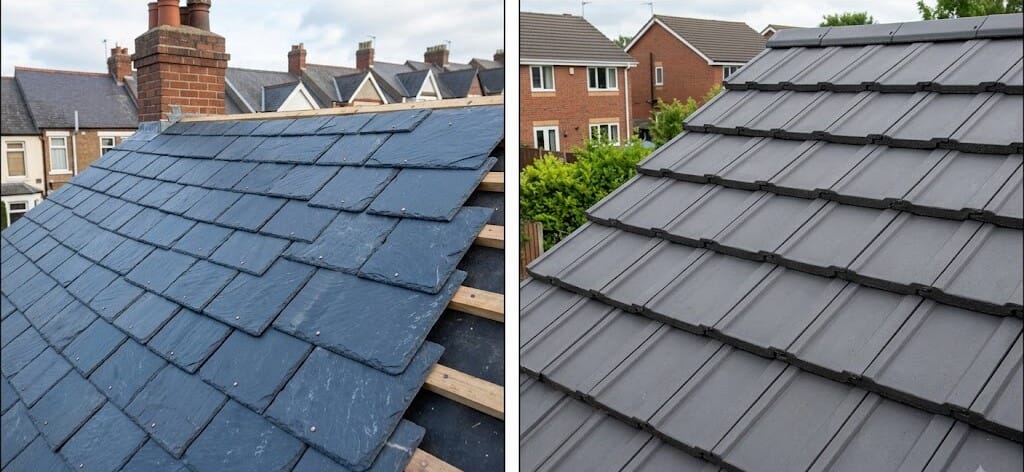
Slate has been the roofing material of choice in Wales for centuries. Mined directly from the earth and split by hand, it is the gold standard for traditional housing stock.
The Pros of Slate
- Unmatched Lifespan: A high-quality natural slate roof can easily last 100 to 150 years. The slate outlasts the timber battens and nails holding it up!
- Aesthetic Authenticity: For period properties and Victorian terraces, nothing matches the sleek, dark, authentic look of real slate.
- Lightweight: Relative to concrete, slate is quite light. This means your roof's timber structure doesn't need to be exceptionally heavy-duty to support it.
- Eco-Friendly: Because it's a 100% natural material with minimal processing, it has a tiny carbon footprint compared to manufactured tiles.
The Cons of Slate
- Cost: Natural slate is significantly more expensive to purchase. It also takes longer to install (as each slate must be individually nailed), driving up labor costs.
- Fragility under impact: While weather-resistant, slate can chip or crack if heavy branches fall on it or if it is walked on incorrectly by inexperienced tradesmen.
The Case for Concrete Tiles
Drive through any housing estate built after the 1970s, and you are looking at concrete tiles. They are manufactured by mixing cement, sand, and water, then molded into various profiles.
The Pros of Concrete
- Highly Cost-Effective: Concrete tiles are mass-produced and drastically cheaper than natural slate.
- Fast Installation: Most concrete tiles are "interlocking," meaning they fit together quickly and cover a larger surface area per tile. This reduces labor costs and scaffolding time.
- Versatility: They come in a massive variety of colors, textures, and shapes. You can even buy concrete tiles designed to mimic the look of natural slate.
The Cons of Concrete
- Weight: Concrete is incredibly heavy. You cannot simply pull old slate off a roof and put concrete on; the timber structure often needs substantial reinforcement to carry the extra load.
- Shorter Lifespan: Concrete tiles usually last between 40 and 60 years. While durable, they will not outlive a slate roof.
- Water Absorption: Concrete is slightly porous. In damp Welsh climates, this can encourage moss and algae growth, making the roof look tired if not maintained.
The Golden Rule of Weight
If your house was originally built with a slate roof, the rafters were calculated for that specific weight. If you switch to concrete tiles to save money, the roof must be structurally assessed. Putting heavy concrete on a slate-rated frame can cause the roof to literally sag and collapse over time.
The Verdict: Which should you choose?
Choose Slate if: You live in an older, period property, you have a higher budget, and you want a roof that you will absolutely never have to replace again in your lifetime.
Choose Concrete if: You are building a new extension, replacing an existing concrete roof, or you are on a stricter budget and want a fast, reliable, weather-proof solution.
Still not sure? The best way forward is to have an expert take a look at your property's structure.
At Eagle Eye Roofing & Building, we provide completely free, transparent site surveys across Swansea and South Wales. We can provide you with quotes for both options, complete with a structural assessment, so you can make the right choice for your home.